North American Bird Diet Behavior
- Melissa Feudi
-
February 03, 2026
-
2505 words
-
14 minutes
Big-picture trends (Northeast U.S./eastern Canada)
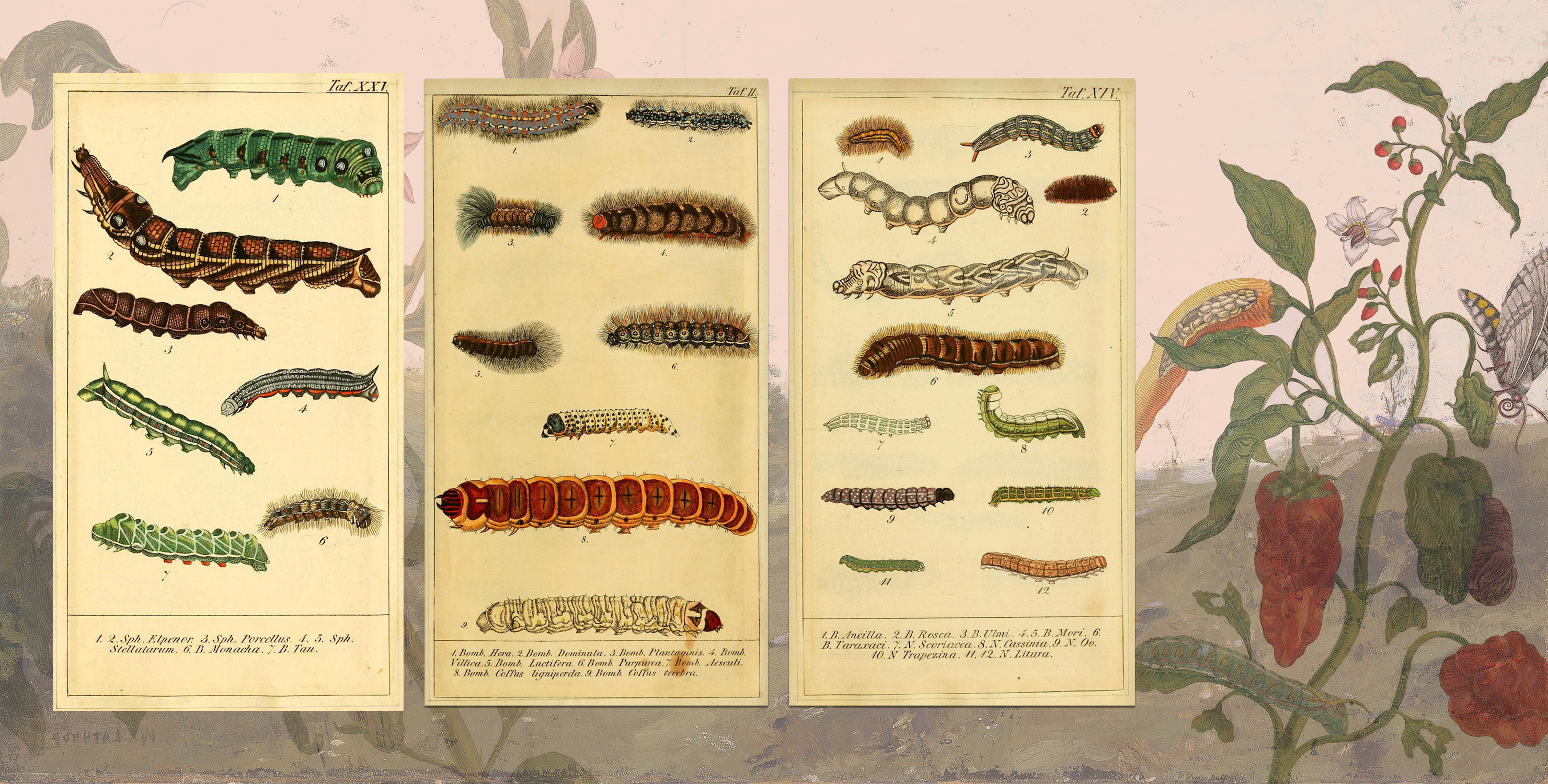
- Caterpillars rule in spring. For most forest songbirds, soft-bodied Lepidoptera larvae (esp. Geometridae & Noctuidae) dominate chick diets during breeding—because they’re large, protein-rich, and easy for nestlings to swallow. Classic Hubbard Brook work and new DNA-based diet studies keep confirming this.
- Birds track where insects are on the plants. Insect biomass (which varies by tree/shrub species and canopy layer) drives where foliage-gleaning birds forage and how dense their territories are. Stands rich in caterpillar-hosting natives = more gleaners.
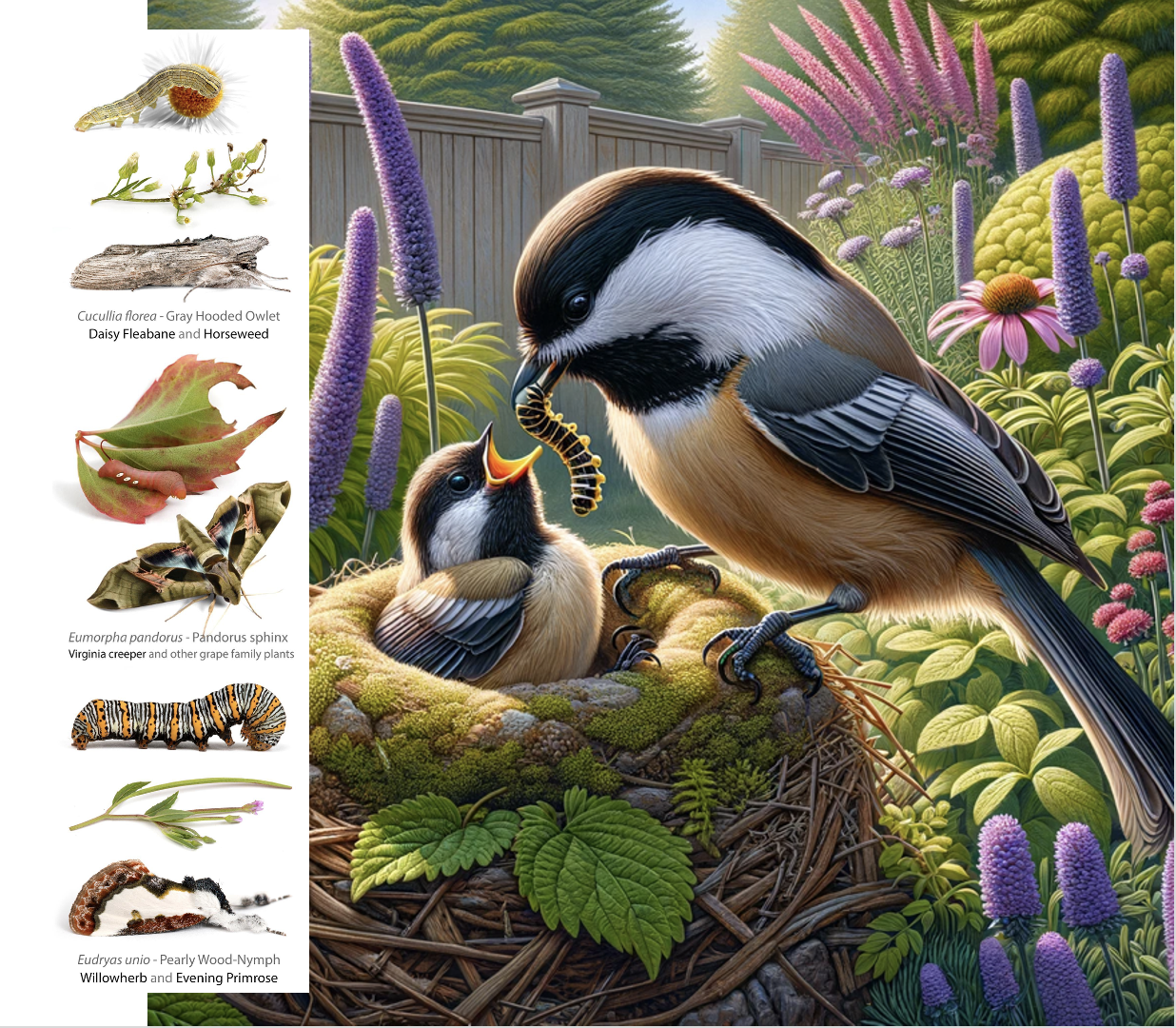
- Native plants → more caterpillars → more successful broods. Yard- and forest-edge studies show population growth and fledging success of insectivores (e.g., chickadees) rise with native plant dominance because natives host far more caterpillars than common ornamentals.
- Aerial insectivores are tied to the “air plankton.” Swallows, swifts, and nightjars depend on Diptera (flies), Ephemeroptera (mayflies), and other emergent adults. Prey availability directly shapes provisioning rates and nestling growth.
- Ground/wood specialists key in on ants and beetle larvae. Flickers and many woodpeckers target ant brood and wood-boring larvae; their foraging habitat choice reflects prey density.
Who eats what (notable Northeast guilds)
Bird group (NE examples) | Prime insect prey in breeding season | Notes |
|---|---|---|
Foliage-gleaning warblers (Black-throated Blue, Ovenbird, Redstart, etc.) | Caterpillars (Geometridae, Noctuidae); also spiders | BTBW nestlings are ~60–87% caterpillars; territory density and foraging follow caterpillar-rich understory/hosts. (PMC, Digital Commons USF) |
Vireos & tanagers (Red-eyed Vireo, Scarlet Tanager) | Caterpillars, beetles, true bugs | Vireos heavily exploit leaf caterpillars; some raid tent-caterpillar nests, though cuckoos & orioles are the specialists. (jimmccormac.blogspot.com) |
Flycatchers (Least, Great Crested, Eastern Phoebe) | Aerial Diptera, small beetles/bugs | Sallying from perches; choose edges/clearings with insect swarms. (nsojournals.onlinelibrary.wiley.com) |
Swallows & swifts (Tree Swallow, Barn Swallow, Chimney Swift) | Flies (multiple Diptera groups), mayflies, caddisflies | Nest success tracks aerial insect pulses; agriculture & weather alter the mix/availability. (nsojournals.onlinelibrary.wiley.com, ScienceDirect, Canadian Science Publishing) |
Woodpeckers (Downy, Hairy, Pileated, Northern Flicker) | Wood-boring beetle larvae; ants (incl. brood) | Flickers forage on ground for ants, selecting open, warm substrates when ants are active. (All About Birds, JSTOR) |
Chickadees & nuthatches | Caterpillars, spiders; winter seeds | Strong preference to forage on native woody plants that host more larvae. (Smithsonian Research Online) |
Riparian/wetland songbirds (Yellow Warbler, Prothonotary Warbler) | Leafhoppers/soft larvae; aquatic-emergent insects (mayflies, midges) | Nestling diet often mixes terrestrial caterpillars with emergent aquatic prey near water. (PMC) |
Cuckoos & orioles (Yellow-billed Cuckoo, Baltimore Oriole) | Hairy caterpillars incl. tent caterpillars | Specialists on spiny/hairy larvae that many species avoid. (jimmccormac.blogspot.com) |
How habitat-specific is the diet?
- Forest species: Diets are plant- and layer-specific. Different trees support different caterpillar faunas; birds key into hosts (e.g., oaks, willows, cherries) and canopy vs. understory strata where biomass peaks.
- Edges/fields/water: Aerial insectivores and flycatchers respond to open-air insect density and emergent events; swallows near lakes/estuaries benefit from mayfly/midge hatches.
- Ground/wood specialists: Flickers pick ant-rich, warm open ground; other woodpeckers follow beetle larvae in dead/dying wood.
Does insect availability determine nesting sites?
Short answer: often it shapes where a pair settles within a habitat, but it’s rarely the only driver of the nest site itself**.**
- Territory settlement & density: Many insectivores distribute themselves according to local prey abundance (ideal free-like responses): more food → smaller territories/more pairs.
- Nest placement constraints: Safety/structure usually come first (cavities, concealment, microclimate, predator avoidance). Birds then forage outward to insect-rich patches. Review work shows nest-site selection is primarily about safety and structure, with food a strong but secondary factor.
- Clear cases where food matters spatially:
- Black-throated Blue Warbler: chooses shrub-dense hardwood stands that also have high caterpillar biomass, boosting provisioning and productivity.
- Tree Swallow: nesting colonies near wetlands/open water track aerial insect supply; provisioning and chick growth rise with fly/emerger availability.
- Northern Flicker: foraging habitat selection mirrors ant activity; nesting still requires a cavity, but territories sit near ant-rich ground.
Bottom line: Food availability helps determine where to hold a territory and how well chicks do, but nest architecture/location (e.g., cavity presence, concealment) usually sets the exact nest site.
Is this about century-old migration routes instead?
- Migration routes and timing are phylogenetically conserved and historically shaped (wintering areas, geography). In the Northeast, many migrants time breeding to hit the regional caterpillar peak, but they don’t re-draw flyways year-to-year based on bugs alone. Within breeding regions, micro-settlement (which valley/stand/shoreline) is where prey availability most obviously comes into play.
Quick takeaways you can use
- If you want birds to succeed, grow native woody plants (oaks, willows, cherries, birches, maples): they host the caterpillars that feed almost everyone’s chicks.
- Expect guild-specific foraging: warblers/vireos in foliage; flycatchers/swallows in open air; woodpeckers/flickers on wood and ant-rich ground. Plan habitat structure accordingly.
- Nest success tracks food nearby, but nest site selection is constrained by cavities/cover. Improve both nesting structure (snags, boxes where appropriate) and insect supply (native plants, less pesticide).
Sources (selected & recent where possible)
- Kaiser et al. 2024: Black-throated Blue Warblers track seasonal insect availability; nestlings 60–87% caterpillars.
- Holmes & colleagues (Hubbard Brook): insect distribution by tree/species & bird foraging patterns (foundational NE work).
- Narango, Tallamy & Marra 2018 (PNAS): native plants → more caterpillars → better breeding success/pop growth (Mid-Atlantic; widely applied in NE).
- Tree Swallow prey availability & provisioning (radar/field studies).
- Northern Flicker diet and foraging habitat linked to ants.
- Nest-site selection review (safety/structure primacy).
If you want, I can tailor this to specific habitats you manage (e.g., yard, meadow edge, riparian strip) and list the top native plants that host the best caterpillars for the bird guilds you care about.
Bird-Insect Diet Trends and Nesting Patterns in Northeastern North America
Insectivorous Birds of Northeastern North America: Diet Trends and Ecological Links
Northeastern U.S. and eastern Canada host many insectivorous birds whose diets shift dramatically during the breeding season. Insects – especially larval forms – dominate nestling diets of warblers, vireos, chickadees, and other songbirds. A landmark analysis notes that most leaf-gleaning warblers feed “very largely on measuring worms [caterpillars] and other…caterpillars,” and that Lepidoptera larvae (caterpillars) are often their “most important food source…especially during the nesting season”. In fact, some chickadee populations may require on the order of 6,000–9,000 caterpillars to rear one clutch of young. More broadly, roughly 90% of many insectivorous songbirds’ diets in spring–summer come from invertebrates, predominantly soft-bodied larvae and beetles.
In general, caterpillars (Lepidoptera larvae) are the most frequently consumed insects by breeding songbirds across forest habitats. Other common prey include beetles (Coleoptera) – especially larval forms inside wood or bark – flies (Diptera), spiders (Araneae), and miscellaneous herbivorous insects. For example, the Wood Thrush (a ground-foraging songbird) feeds mainly on litter-dwelling invertebrates: “adult beetles and flies, caterpillars, spiders, millipedes, woodlice, and ants” during summer. The Eastern Bluebird (an open-country ground-forager) also takes “caterpillars, beetles, crickets, grasshoppers, and spiders” as its main prey. In short, most migratory songbirds and allied insectivores concentrate on larval Lepidoptera (caterpillars of moths and butterflies) supplemented by beetles and other invertebrates during the breeding season.
By contrast, flycatchers and aerial foragers rely primarily on flying insects. For instance, the Eastern Phoebe eats “flying insects…making up the majority of its diet,” including wasps, beetles, dragonflies, butterflies, flies, midges, and cicadas. Likewise, swallows (e.g. Purple Martins) and other aerial insectivores catch large Diptera and Odonata on the wing. The Common Nighthawk, a crepuscular aerial forager, feeds “almost exclusively” on flying insects – including “wasps, beetles, caddisflies, moths, mayflies, flies, crickets, grasshoppers, and other insects”. These birds flock over open water, fields or cities at dusk and dawn, exploiting insect emergences and swarms (e.g. under lights).
Bird groups, their typical insect prey, and habitats:
Bird Group (examples) | Key Insect Prey | Habitat / Foraging Stratum |
|---|---|---|
Canopy/foliage gleaners (warblers, vireos, chickadees) | Primarily caterpillars (Lepidoptera larvae); also flies, beetles, aphids, spiders | Deciduous/mixed forest canopy and understory; nest in trees/shrubs. |
Shrub-edge songbirds (Yellow, Chestnut-sided Warbler; Yellow-breasted Chat, etc.) | Caterpillars, leafhoppers, other soft insects, some spiders | Thickets, forest edges, shrubby fields; forage on small branches and leaves. |
Flycatchers (e.g. Eastern Phoebe, Acadian Flycatcher) | Flying insects – flies (Diptera), wasps/bees (Hymenoptera), dragonflies, butterflies | Open woodlands, water margins, edges; hawking from perches or foliage. |
Aerial insectivores (Swallows, Martins, Chimney Swift) | Aerial insects – flies, gnats, dragonflies, bees, mayflies, etc. | Open airspace over fields, water, even suburbs; catch prey on the wing. |
Woodpeckers (Downy, Hairy, Pileated, Flicker) | Wood-boring beetle larvae (cerambycid, buprestid), bark beetles; ants and termites; pupae; also bees/wasps, spiders | Deadwood and standing trees (except Flicker, which forages on the ground for ants) in forests. |
Crepuscular aerial (nightjars) (Common Nighthawk) | Flying insects (moths, beetles, wasps/ants, mayflies, grasshoppers, etc.) | Open fields, clearings, rooftops – hunt insects in low-light. |
Ground-foraging insectivores (Bluebird, Thrushes, Robin) | Ground-dwelling insects: caterpillars, beetles, grasshoppers, worms, snails | Open woodlands, lawns, leaf litter; Bluebirds forage bare ground, thrushes in leaf litter. |
Wetland/shrub insectivores (Red-winged Blackbird, Marsh Wren, etc.) | Aquatic and semi-aquatic insects (water beetles, dragonfly larvae, midges), plus grasshoppers and spiders | Marshes, wetlands, reed beds; probe vegetation or wade shallowly. |
Each bird group shows strong prey preferences aligned with its foraging method. For example, woodpeckers specialize on wood-boring beetle larvae and ants. Downy and Hairy Woodpeckers subsist mostly on beetle larvae under bark, with ants and caterpillars as supplements. Pileated Woodpeckers feed “largely on ants, including carpenter ants, as well as termites and the larvae of wood-boring beetles”, creating distinctive rectangular holes when excavating nests. In contrast, the ground-feeding Northern Flicker eats “mainly ants and beetles,” digging with its bill. Among songbirds, Black-capped Chickadees and other foliage-gleaners feed large quantities of caterpillars and other insects (80–90% of diet in breeding season), often gleaning from both live leaves and dead twigs. Vireos like the White-eyed and Red-eyed Vireo take a mix of caterpillars, flies, beetles and aphids, reflecting the prey available in mid-forest foliage. Flycatchers (Eastern Wood-Pewee, Phoebe, etc.) disproportionately catch flying Diptera and Hymenoptera, and thus are common in open edges or over streams. Aerial foragers (swallows, nighthawks) preferentially eat flying insects – swallows often target mid-air flies and dragonflies, while nighthawks take anything “in clouds of insects” at dusk, from moths and queen ants to mayflies.
These prey preferences tie closely to habitat and insect availability, shaping nest-site choices. Birds tend to breed where their food is plentiful. For example, a recent study showed that Carolina Chickadees (a close relative of the Black-capped) nested mainly in yards with abundant native trees – oaks, cherries, maples – that hosted vast caterpillar populations. In gardens with mostly non-native ornamentals, caterpillar numbers were extremely low (often <1 per branch), whereas native oaks could yield dozens in minutes. Unsurprisingly, chickadees built nests more often in the caterpillar-rich yards. This underscores how plant/insect community composition drives bird habitat selection: native deciduous forests or woodlots with high Lepidoptera biomass support warblers, vireos, and chickadees, whereas areas poor in caterpillars (e.g. lawns with exotic plants) are avoided.
Likewise, spruce forests with periodic outbreaks of the spruce budworm ()Coccyicide moth produce pulses of caterpillars that strongly influence bird populations. The Cape May Warbler, for instance, feeds heavily on spruce budworm and other conifer-associated larvae. Its numbers “increase during population explosions of spruce budworm in northern forests”, illustrating a tight ecological link. Conversely, species like Wood Thrush and Ovenbird, tied to mature deciduous forest floors, benefit from moist leaf litter rich in earthworms and insects, whereas they avoid heavily disturbed or treeless areas. In wetland habitats, Red-winged Blackbirds and marsh wrens forage among cattails and sedges, probing for aquatic insect larvae. In suburban and riparian edges, mixed diets prevail: many insectivores will also consume berries or fruits when insects wane (e.g. vireos and thrushes take berries in fall).
Overall, there are strong bird–insect associations by habitat strata:
- Forest canopy and midstory: overwhelming reliance on caterpillars and beetles. Migratory warblers (e.g. Black-throated Green, Blackburnian) and resident titmice and vireos time breeding to the spring caterpillar peak.
- Shrub/understory edges: shrubland warblers (Yellow, Chestnut-sided) and sparrows forage on caterpillars and hemipterans (leafhoppers) in low foliage.
- Open ground and fields: Eastern Bluebirds, Meadowlarks, and bobolinks take grasshoppers, crickets, and ground beetles, nesting where tall grass patches support these insects.
- Wetlands and riparian zones: Marsh birds (bitterns, rails) and flycatchers (Kingbirds) depend on aquatic larvae (dragonfly, mayfly nymphs) and emergent insects.
- Suburban/backyard areas: Chickadees, titmice, and flycatchers will persist if ornamental plantings harbor enough caterpillars; otherwise they simply pass through during migration.
These patterns influence nesting decisions. Birds often choose nesting habitats where prey is most accessible to their young. For example, cavity-nesters like chickadees and woodpeckers excavate in forests with abundant caterpillars and wood-borer larvae. Ground-nesters like certain sparrows or nighthawks use open habitats where soil-dwelling and flying insects are plentiful. Even subtle choices reflect foraging: Red-eyed Vireos prefer shady deciduous groves where caterpillars are numerous, whereas Yellow-breasted Chats select dense thickets buzzing with insects.
Finally, migration phenology is partly tied to insect availability but also to innate cues. Insect pulses create “resource waves” that migrating birds can track. For instance, the Emergence of aquatic insects (mayflies, caddisflies) moves northward with spring; birds like swallows and flycatchers may follow these hatches. Research on river salmonflies shows that asynchrony in insect emergences can allow mobile predators (birds) to “migrate to feed on aquatic insects and track resource waves across a landscape”. Thus some migratory birds may time their northward journeys to intercept peak insect supplies. However, long-standing migration schedules remain primarily cued by photoperiod and temperature, with food availability playing a supporting role. Climate-driven mismatches have been noted – if bird arrival advances faster or slower than insect phenology, breeding success can suffer. In sum, while many insectivores arrive on breeding grounds when insects bloom, other factors (day length, weather, historical routes) also strongly shape migration timing.
Key Patterns and Exceptions: In summary, caterpillars dominate breeding diets of most northeastern insectivores. Warblers, vireos, chickadees and similar gleaners show a pronounced lean toward Lepidoptera larvae in their nestling diets, often over 50% by biomass. Woodpeckers instead specialize on wood-borers and ants. Aerial feeders focus on flies, dragonflies, wasps, etc. Habitat context matters: birds nest where their insect prey is most abundant – for example, chickadees nested much more in caterpillar-rich native woodlots, and northern warblers peak with spring caterpillars in deciduous forests. Specialist relationships abound: Cape May Warblers and spruce budworm; nighthawks and emergent night-flying insects. Notable exceptions include species that supplement insects heavily with other foods (e.g. robins eat many earthworms and fruits, and northern flickers eat ants almost exclusively). Recent studies emphasize these links: for instance, a 2017 Audubon study quantified how 6,000–9,000 caterpillars may be needed per chickadee brood, and how planting native oaks and cherries vastly boosts insect prey. These contemporary findings underscore that conserving insect-rich habitats (especially native plant communities) is critical for supporting northeastern birds in the breeding season.
Sources: We drew on recent ornithological and conservation literature to characterize northeastern bird diets. Key sources include Cornell Lab species accounts and Audubon field guides, which detail dietary habits by species, and studies linking prey abundance to breeding (e.g. Narango et al. on chickadees and caterpillars). We also note research on aquatic insect emergence and predator tracking. In cases where peer-reviewed data were lacking for specific Northeast species, we rely on authoritative life-history summaries (Cornell, Audubon, Britannica) and recent conservation analyses to capture general trends.